
Your refrigeration system was most likely commissioned for the hottest day of the year and peak production load.
On all other days, it may be operating below its energy-efficiency optimum.
That is not a mistake. It is by design: the manufacturer and installer size the system so that refrigeration capacity is sufficient even under the most demanding conditions. Process engineers then select the cold-room and freezer temperature setpoints required for production. However, the compressor plant's refrigerant temperature setpoints usually remain fixed, and operators rarely change them.
Meanwhile, actual operating conditions change constantly:
→ ambient temperature, seasonality
→ production load
→ refrigeration demand throughout the day
→ temperature requirements for cold rooms and freezers The opportunity for optimisation lies precisely in the gap between how the system was originally commissioned and the conditions it operates in today.
DWEEN Cold works much like a driver-assistance system in a car. It does not question the driver's decisions or the manufacturer's design – it simply helps the system adapt more efficiently to actual conditions.
So DWEEN Cold:
→ does not alter the existing controls configuration
→ does not interfere with the physical installation
→ requires no new equipment
→ adjusts only the setpoints, and only within the safe limits approved by the manufacturer
DWEEN Cold continuously analyses data from the existing SCADA or PLC and recalculates the refrigeration system's setpoints based on actual refrigeration demand and ambient conditions.
This keeps the system operating closer to its true energy optimum while remaining within the safe operating limits defined by the manufacturer.
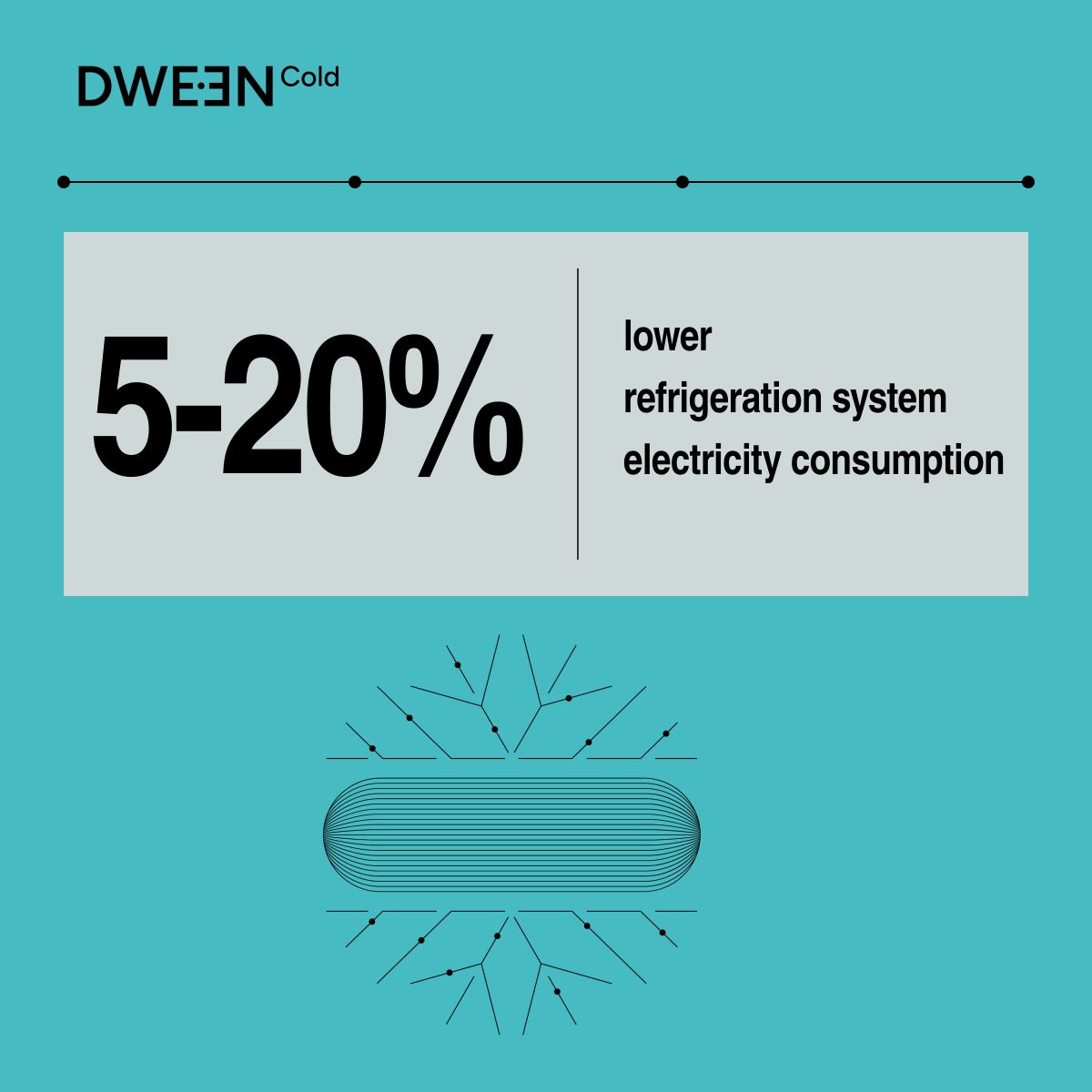
At the facilities where DWEEN Cold is installed, refrigeration system electricity consumption typically decreases by 5–20 %.
Why does this matter?
In food processing plants, the refrigeration system is often one of the largest electricity consumers. A few percent off a large consumption base can therefore deliver greater savings than a double-digit improvement on a smaller consumer.
There is another frequently overlooked benefit: optimisation no longer depends on someone remembering to adjust the setpoints. The algorithm recalculates them continuously, with the same consistency on day and night shifts, on working days and during holiday periods.
When were your refrigeration system's setpoints last recalculated – not merely adjusted, but recalculated against actual operating conditions?
For industrial companies
We offer critical digital twin capabilities that help maximize energy efficiency, sustainability and maintenance goals.
For Partners
We offer a self-service digital twin platform that helps you scale your business by delivering additional value to your key manufacturing and production clients.